
- 0086-15694498760
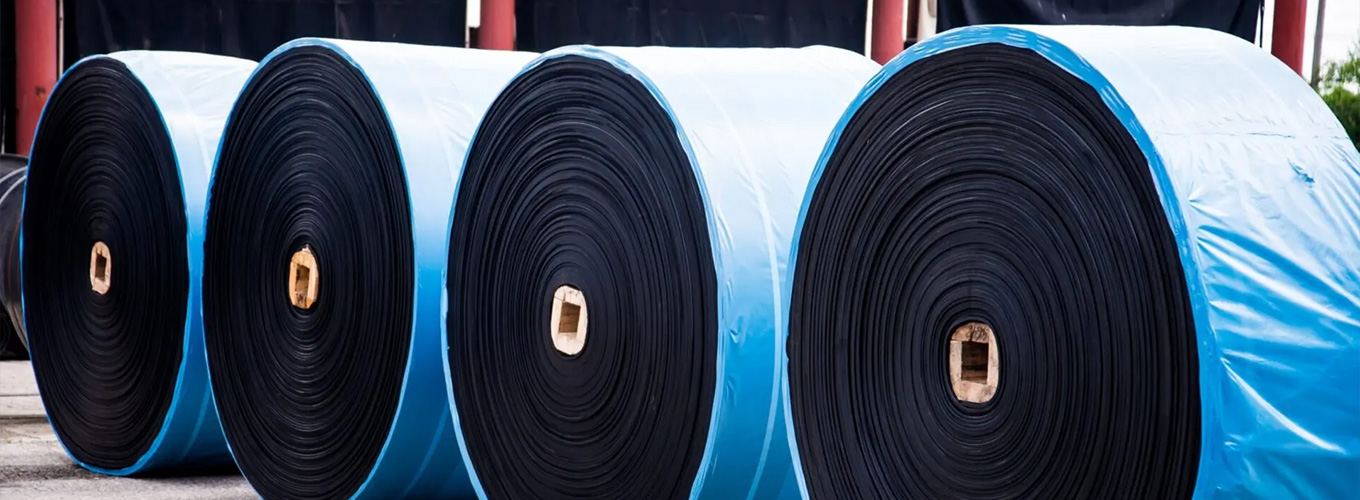
Heat resistant conveyor belts, as a special type in the field of conveyor belts, have been increasingly widely used in industries such as metallurgy, building materials, chemicals, and food in recent years, and their quality requirements have become increasingly strict. However, as the usage time prolongs, various problems inevitably arise with the conveyor belt. Especially heat-resistant conveyor belts, after long-term use, various defects may gradually appear on their appearance.
The formation and solution of scars
The visible scars formed by micro depressions on the surface of the covering adhesive are a common appearance problem of heat-resistant conveyor belts. There are various reasons for its occurrence, including insufficient plasticity and poor fluidity of the rubber material. Especially when the covering rubber material of ethylene propylene rubber is not properly matched, such as improper use of softeners, it can lead to low plasticity and poor flowability of the rubber material, thereby causing visible scars.
In response to this issue, Qingdao Longyuan Tongda Rubber proposes a solution: adjust the ratio of softener and plasticizer reasonably, strictly control the plasticity and uniformity of the mixed rubber, and ensure that the rubber material meets the process requirements. At the same time, if the vulcanization speed of the rubber material is too fast after the flat vulcanizing machine is closed, and the rubber material has already been vulcanized before it is completely flattened, it will also form visible scars. Therefore, it is necessary to control the vulcanization speed of the rubber material appropriately.
In addition, if the crosslinking agent of chloroprene rubber, magnesium oxide, absorbs moisture and forms clusters, its anti coking performance will be affected, leading to excessive sulfur rate and causing visible scars. Therefore, ensuring the quality of magnesium oxide is crucial. In addition, when the plasticity or viscosity of the rubber material is too high, it is prone to carbonation during the vulcanization process, causing visible scars. Attention should be paid to controlling the plasticity of the covering adhesive to avoid excessive stickiness affecting air discharge.
With the increasing demand for heat-resistant conveyor belts in industries such as metallurgy, building materials, chemicals, and food, the quality requirements are becoming increasingly strict. Not only does it require excellent product performance and durability, but it also demands an aesthetically pleasing appearance. Therefore, solving appearance problems such as scars is particularly important.
